ServicesReverse Osmosis Systems
Reverse Osmosis Systems in Bee Cave
A reverse osmosis system sits under your kitchen sink and gives you clean, clear drinking water from its own small faucet. We test your water first, explain what the system will and will not remove, and install it for free.
What reverse osmosis does, in plain terms
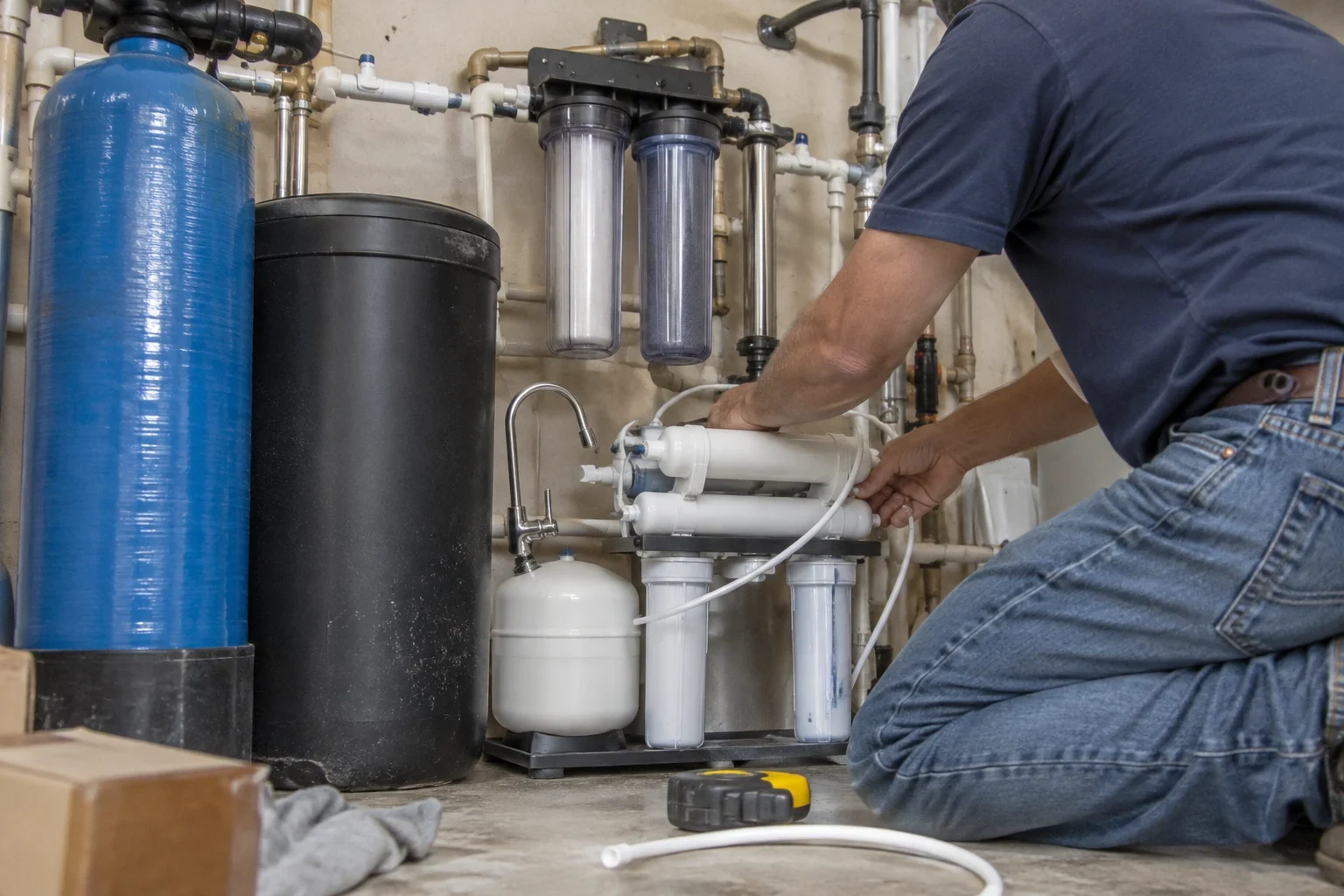
Reverse osmosis uses pressure to force your water through an extremely fine membrane. The water itself passes through. Most dissolved minerals, metals such as lead, and many other trace contaminants are left behind. Those leftovers are flushed to the drain, and the filtered water is stored in a small tank under the sink until you turn on the faucet.
On the way to the membrane, the water first goes through a sediment filter and then a carbon filter. They trap grit and chlorine, both of which would shorten the membrane's life. One last carbon stage cleans up the taste just before the water reaches your glass.
RO is the right choice when the water you care about most is what you drink and cook with. If the real problem is spots on the shower glass or scale in the water heater, that calls for treatment at the main line, like whole-home filtration or a water softener. We will tell you honestly which one fits what you are seeing.
Everything that comes with your install
- 01
Testing before anything else
We check hardness, total dissolved solids and chlorine before naming a system. The readings tell us how hard the membrane will have to work and whether it needs protection in front of it.
- 02
Every filter stage
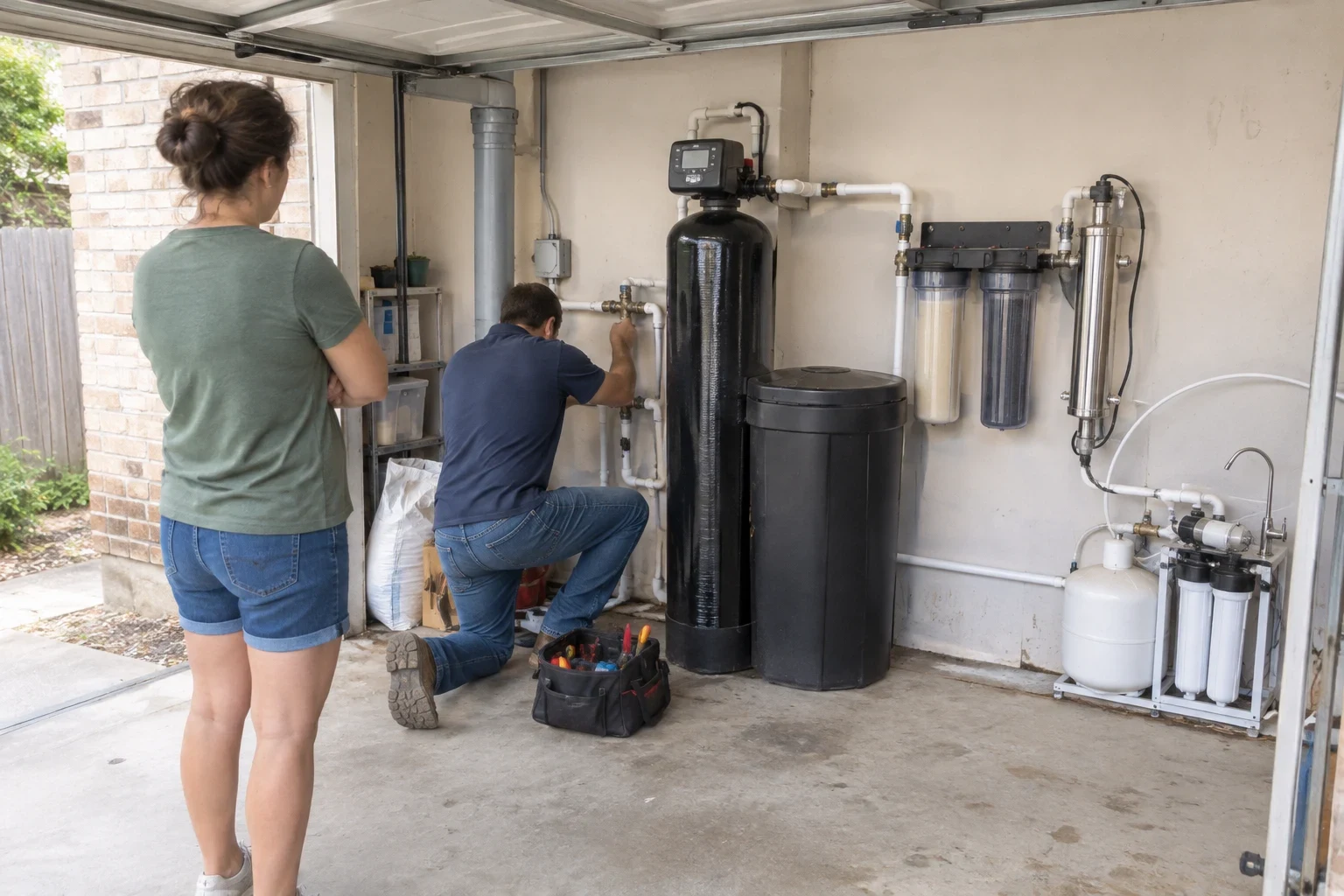
The setup includes a sediment prefilter, a carbon prefilter, the membrane, a carbon polishing filter and the storage tank. Some models add a remineralization stage that puts back a little calcium and magnesium for flavor.
- 03
Its own drinking faucet
The faucet goes on your sink or counter, often using a spare sprayer or soap hole. We show you finish choices so it looks right beside your main faucet.
- 04
Supply and drain hookups
We tie into the cold line under the sink and connect the drain line correctly, so the unit runs quietly and keeps clear of your garbage disposal.
- 05
A fridge or ice maker line, if you want one
Like filtered water from the door dispenser and in the ice bin? We can run separate tubing from the RO system to your refrigerator.
- 06
A tour of the system before we go
We point out each filter, show you how to turn the system off and tell you when each part will be due for a change.
Questions about Reverse Osmosis Systems?
Call(512) 601-8389Signs an RO system may help your home
You buy cases of bottled water
When your family skips the tap and reaches for plastic bottles, a separate RO faucet can end the store runs and the heavy lifting that comes with them.
Coffee and tea taste flat or chalky
Dissolved minerals and chlorine change how drinks taste. With RO water, your coffee tastes like the beans you bought.
White crust on the kettle
Scale in kettles, coffee makers and ice trays points to mineral-heavy water, which is common across the Hill Country. RO removes most of it from the water you drink.
Cloudy ice cubes
Minerals and trapped gases make ice cloudy and can give it an off taste. Running a fridge line from the RO system usually clears that up.
Questions about older plumbing
If your home has older pipes or fixtures and lead is on your mind, a test will show what is there. RO is one of the most effective ways to reduce lead at the kitchen tap.
How the work goes
- 1
Your call and water test
You tell us what is bothering you about your water. We set up a free test so the recommendation is based on your numbers, not a guess.
- 2
A look under the sink
We check the cabinet space, the disposal, the drain layout and your water pressure. Low pressure means slow tank filling, and we will tell you if a small booster pump would help.
- 3
Installation day
We shut off the cold supply, mount the filters and tank, set the faucet and connect the drain. Most kitchens are back to normal the same visit, and we clean up the cabinet when we finish.
- 4
Flush and first glass
New filters and a new membrane need flushing before use. We run the system, check every fitting for drips, and you taste the result before we go.
What changes the cost
Installation costs you nothing, so the bulk of the price is the system plus any extras that fit your sink and how you use water. We share the quote by phone and go through it line by line, so you know why each part is on it. These factors move the total the most.
- Which system you choose
- The 5-stage tank reverse osmosis system (sediment, GAC, carbon block, RO membrane and post carbon, with an under-sink storage tank) costs less. Our tankless reverse osmosis system (800 gallons per day, 7 stages) costs more. A remineralization stage adds a small amount.
- What your water starts with
- Water loaded with hardness or minerals can scale a membrane quickly. Then it may be wiser to put a conditioner or softener in front of the RO unit, which changes the total cost.
- Faucet choice and extras
- An upgraded faucet finish, a line to the refrigerator or ice maker, and a booster pump for weak pressure each add parts.
- Replacing filters over time
- Expect fresh prefilters once or twice a year and a fresh membrane every few years, depending on your water and how much you use. We cover those costs before you commit, so upkeep holds no surprises.
Common reverse osmosis questions
Does an RO system use extra water?
All RO systems send some water down the drain to rinse away what the membrane catches. That is expected. Newer models and good water pressure keep it low, and we can show you how efficient each model we carry is.
Should I worry that RO takes out minerals?
Food supplies most of the minerals your body uses, not water. Some people simply prefer the taste with a few minerals left in, and a remineralization stage adds a little back. Feel free to taste both before you pick.
Will it fit under a sink that has a garbage disposal?
Usually, yes. The filters hang on the cabinet's side wall and the tank sits in a corner, clear of the disposal. We measure during our visit, and if space is tight we tell you and show you a tankless model with a smaller footprint.
Will it take out chlorine and lead?
Yes. The carbon stages remove chlorine taste and odor, and the membrane cuts lead and many other dissolved contaminants. A test beforehand shows what your water holds, so you can see the change.
How is an RO system covered?
Labor on reverse osmosis systems is covered for 1 year, tanks and ceramic discs carry a lifetime warranty, and the control valve, circuit board and filter media are covered for 5 years. If something stops working in that first year, call us and we will help get it sorted out.
Find out if RO is right for your kitchen
Start with a free water test and an honest read of the results. If an under-sink system makes sense, we will give you a clear quote and install it free.