ServicesWater Softener Installation
Water Softener Installation in Bee Cave
Crusty faucets, cloudy glasses and a water heater that pops and grumbles are classic hard water clues. We check your water first and walk you through what the results mean. A softener only comes up if your water needs one, and then we size it and fit it neatly.
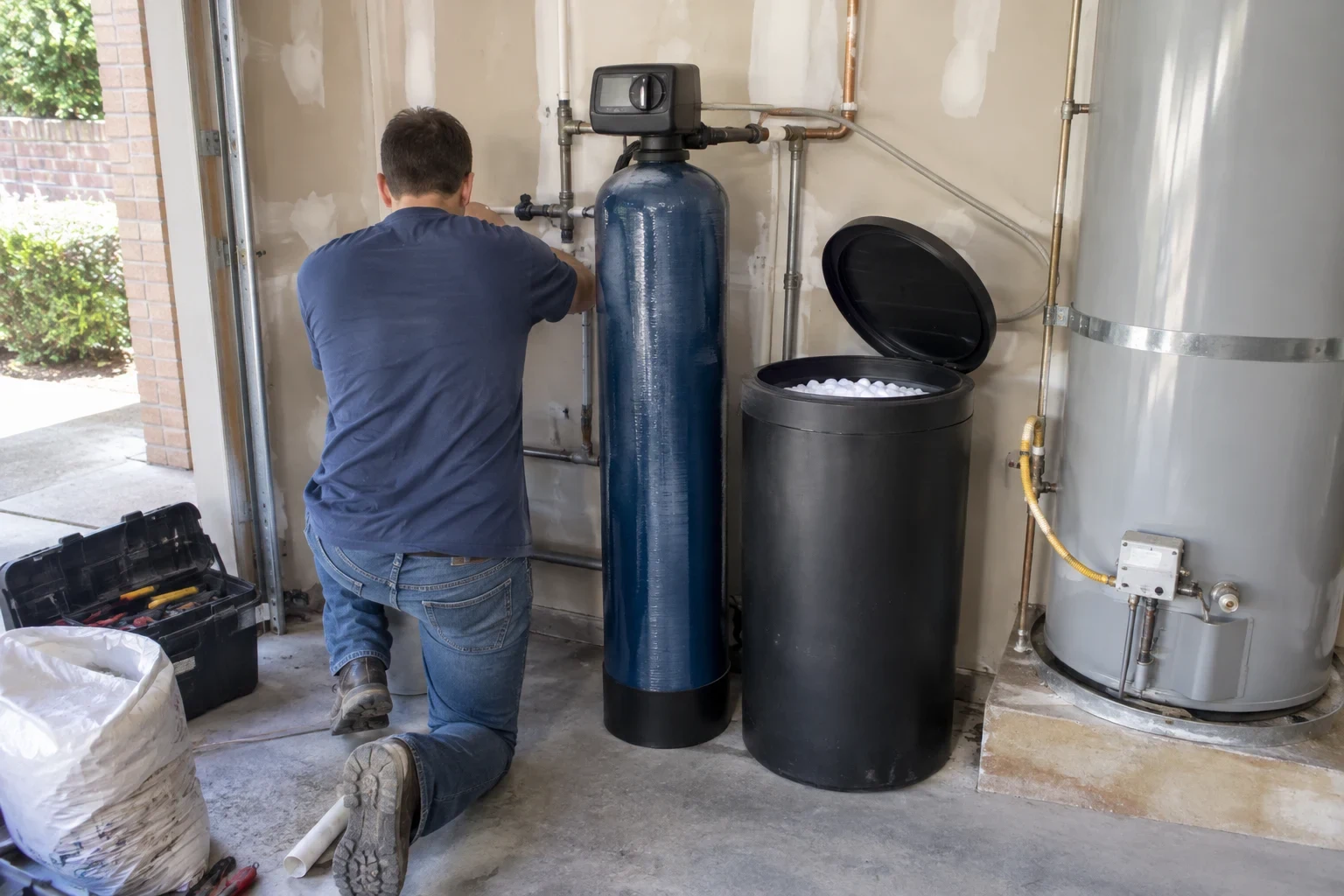
What a softener does, in plain terms
Hard water is water carrying dissolved calcium and magnesium. Heat it or let it dry, and those minerals settle out as the chalky white film on showerheads, glass doors and the bottom of your water heater. A softener fixes this with a tank full of small resin beads. As water flows through, the beads grab the hardness minerals and release a little sodium, or potassium if you prefer. On a schedule, a second tank sends salty brine through the beads to clear them and get them ready again.
What you get is water that rinses off cleanly, lathers well and no longer leaves scale inside pipes and appliances. Limestone runs under much of the Hill Country, so hard water is common and a softener is often a sensible choice. We still want you to look at your own test results before spending anything. If a salt-free water conditioner or whole-home filtration lines up better with what you want, we will say so directly.
What comes with your softener install
- We test before anything else
- We measure hardness and look for iron before suggesting any equipment, since both shape the model and settings. You see the readings, and we explain each one.
- Sized for your household
- We match capacity to your hardness and your family's daily water use. Too small a unit regenerates constantly and burns through salt. Too large a unit means paying for capacity you never use.
- Bypass valve
- Each softener we fit gets a bypass, so water can flow around it during service or whenever you want untreated water, while the house keeps running as usual.
- A drain line done right
- Every regeneration sends rinse water to a drain. We install that line with an air gap so dirty water can never flow back into the system.
- Programming and a walk-through
- We set the regeneration schedule, show you where the salt goes and how to read the control head, and explain what normal operation looks and sounds like.
Clues your home may need a softener
White crust on fixtures
That rough white ring around faucets, showerheads and sink edges is mineral scale. You can scrub it off, but it returns within days.
Spotty dishes and glass
Hazy glasses from the dishwasher and speckled shower doors are minerals left over once the water dries.
Soap that barely suds
Hard water works against soap and shampoo. You use more, and your skin and hair still feel coated.
Popping or rumbling from the water heater
These sounds usually mean scale has piled up at the bottom of the tank. The heater has to work harder, which can cut years off its life.
Rough, faded laundry
Minerals caught in the fabric make towels scratchy and colors fade faster than they should.
How your softener job goes
- 1
A phone call and a free test
Let us know what you have seen around the house. We book a time to test your water at home and go through the readings together.
- 2
A quote over the phone
When a softener fits, we recommend a size, tell you why and mention any add-ons worth a look. When it does not, we tell you so plainly.
- 3
Installation
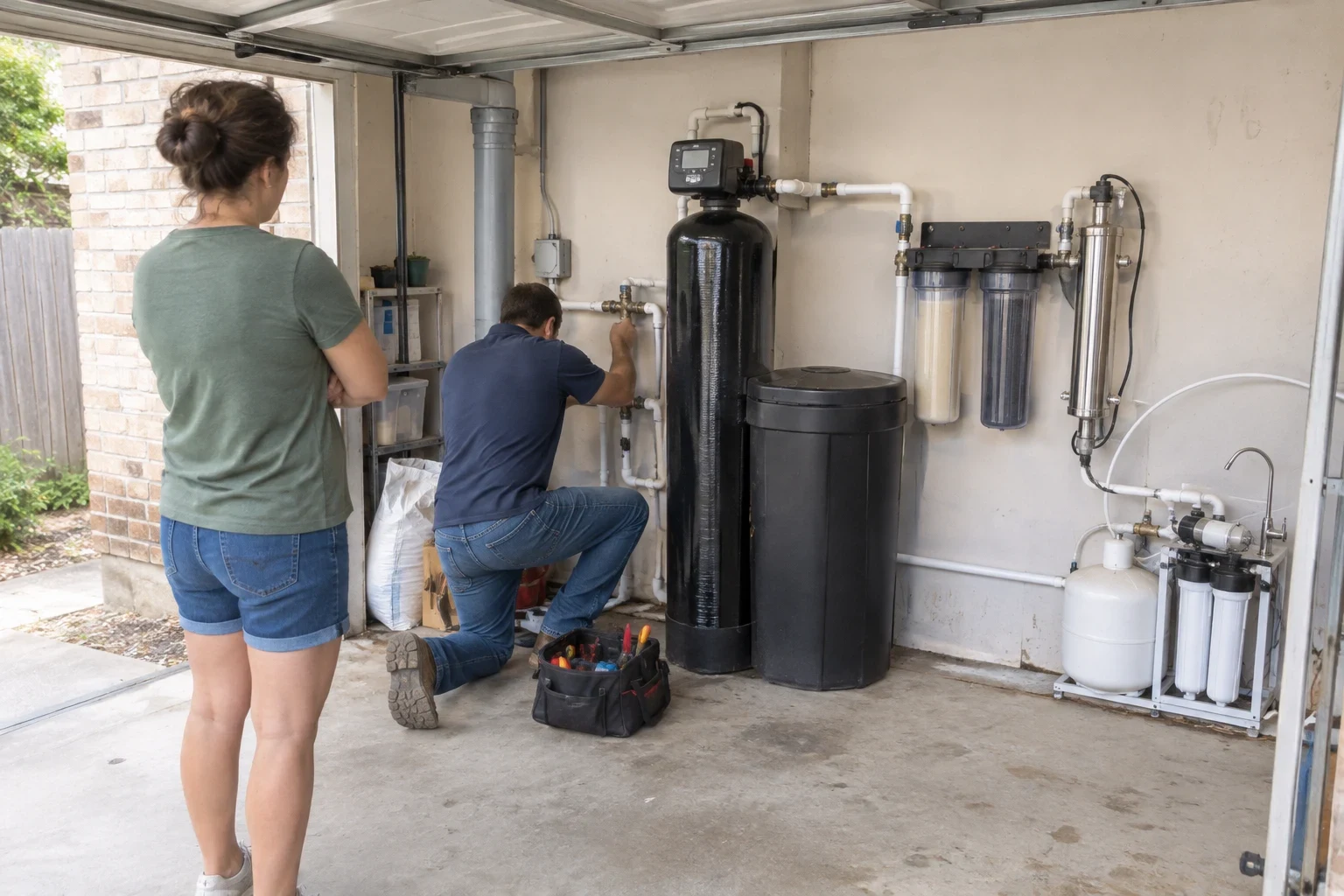
We turn the water off for a short time, connect the softener and bypass where the main line enters your home, and run the drain line with its air gap. The brine tank goes in last. Most homes have water for much of the visit.
- 4
First run and tidy-up
With everything hooked up, we send water through the system, check every joint for drips, set the controls and clean up. Then we show you how it all works.
What goes into your softener price
We install for free, so your price mostly covers the equipment and any plumbing your home calls for. A few things raise or lower that number. We cover each on the phone, so your quote is clear by the time you read it.
- Hardness level and household size
- Harder water and more people need more resin capacity. We size from your real test readings instead of a guess.
- Where the main line is
- Many newer homes came with a softener loop already roughed in, usually in the garage. Without one, we may need to run extra pipe to a good spot for the tanks.
- Metered or timer control head
- A metered head counts the gallons you use and regenerates only when it has to, which tends to save salt and water over time. A timer head regenerates on a fixed schedule and costs less up front.
- Adding a filter
- A softener does not fix chlorine taste or odor. Some households add a carbon filter ahead of it, or a reverse osmosis faucet for drinking and cooking.
Common softener questions
Something not covered here? (512) 601-8389
What sets a softener apart from a salt-free conditioner?
A softener takes calcium and magnesium out of the water and replaces them with a little sodium or potassium. A salt-free conditioner leaves those minerals in but changes them so they are less likely to cling to surfaces as scale. If you want spot-free glass and a soft, slick feel in the shower, choose a softener. If skipping salt matters more and protecting your plumbing is the main goal, our Salt-Free Water Conditioners page covers that choice.
Will softened water taste salty?
No. How much sodium gets added depends on how much hardness is removed, and in most homes it is too little to notice. If you are limiting sodium, you can switch to potassium chloride pellets or drink from a reverse osmosis faucet.
How often does the salt need refilling?
It depends on your hardness and how much water your household uses each day. Many homes add salt every month or two. On install day, we show you how to open the brine tank and tell when the salt is getting low.
How is the softener covered?
You get a lifetime warranty on tanks and ceramic discs, 5 years on the control valve, circuit board and filter media, and 1 year on labor. Once you pick a system, we show you which of those terms apply to it.
Do I really need a test before buying?
Yes. Hardness differs from home to home, and iron in the water changes how a softener should be set up. A test up front means you only pay for capacity you will use, and it is free.
Find out what your water needs
We'll test your water, explain the results in plain English, and give you a clear quote if a softener is the right fit. Installation is free.