ServicesWater Testing & Analysis
Water Testing & Analysis in Bee Cave
Hardness, chlorine, iron and pH each show up differently at the tap. We measure them in your home, explain every reading in everyday words and give you a straight answer on whether your water needs any treatment at all.
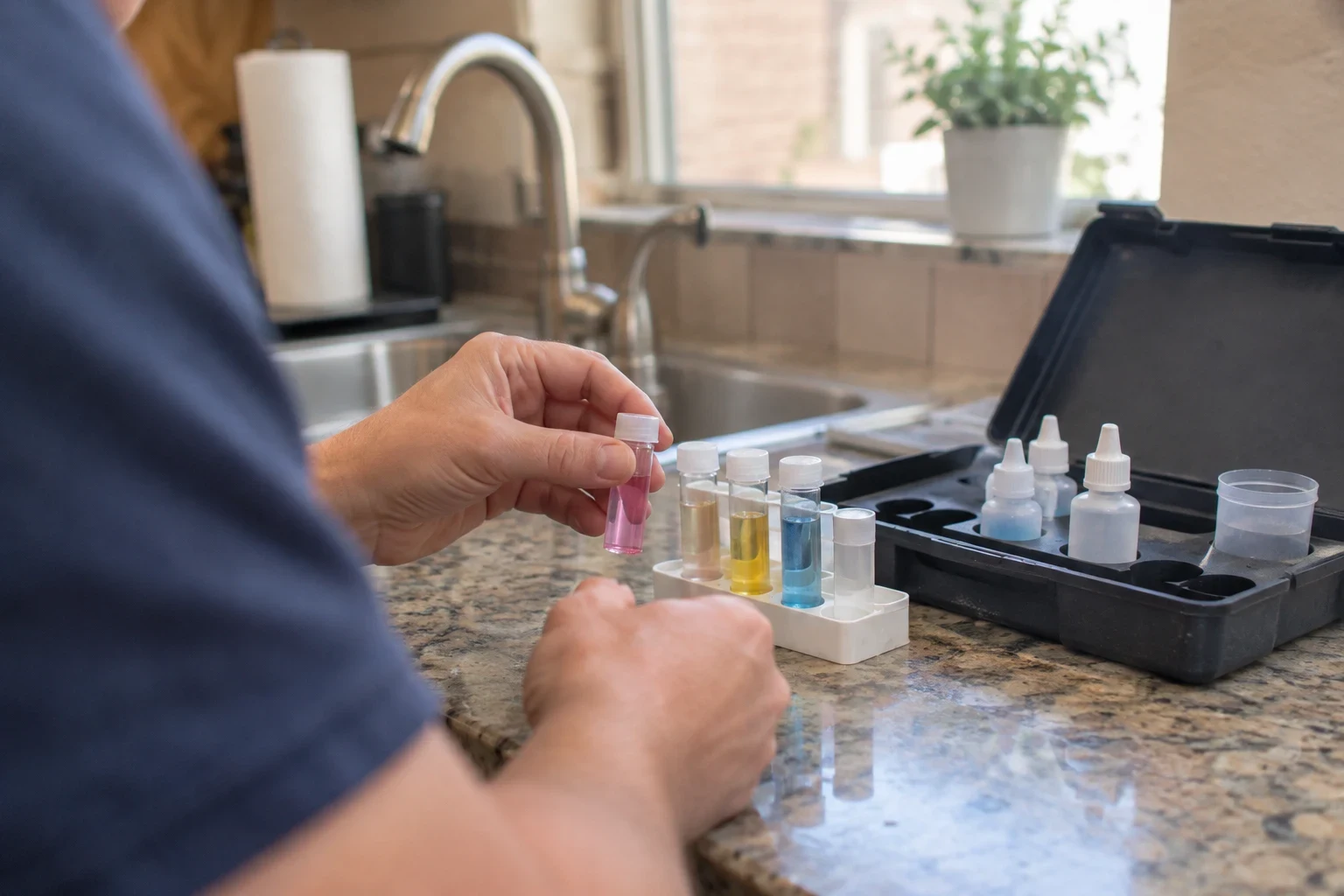
What a water test tells you
Spotty glasses, a pool smell at the faucet or a chalky ring on the shower head are clues, not answers. Testing puts a number on each one, so you can see what is behind the problem and how much of it there is.
We check the things that most often show up in local homes: hardness, chlorine, total dissolved solids, pH and iron. Hill Country water often runs on the hard side because of the limestone it passes through, so we measure hardness rather than guess at it.
After that, we explain what each result means for your plumbing, your fixtures and your glass of water. Some readings point to a fix and some are perfectly fine, and we tell you which is which. When nothing needs treating, that is exactly what we will say.
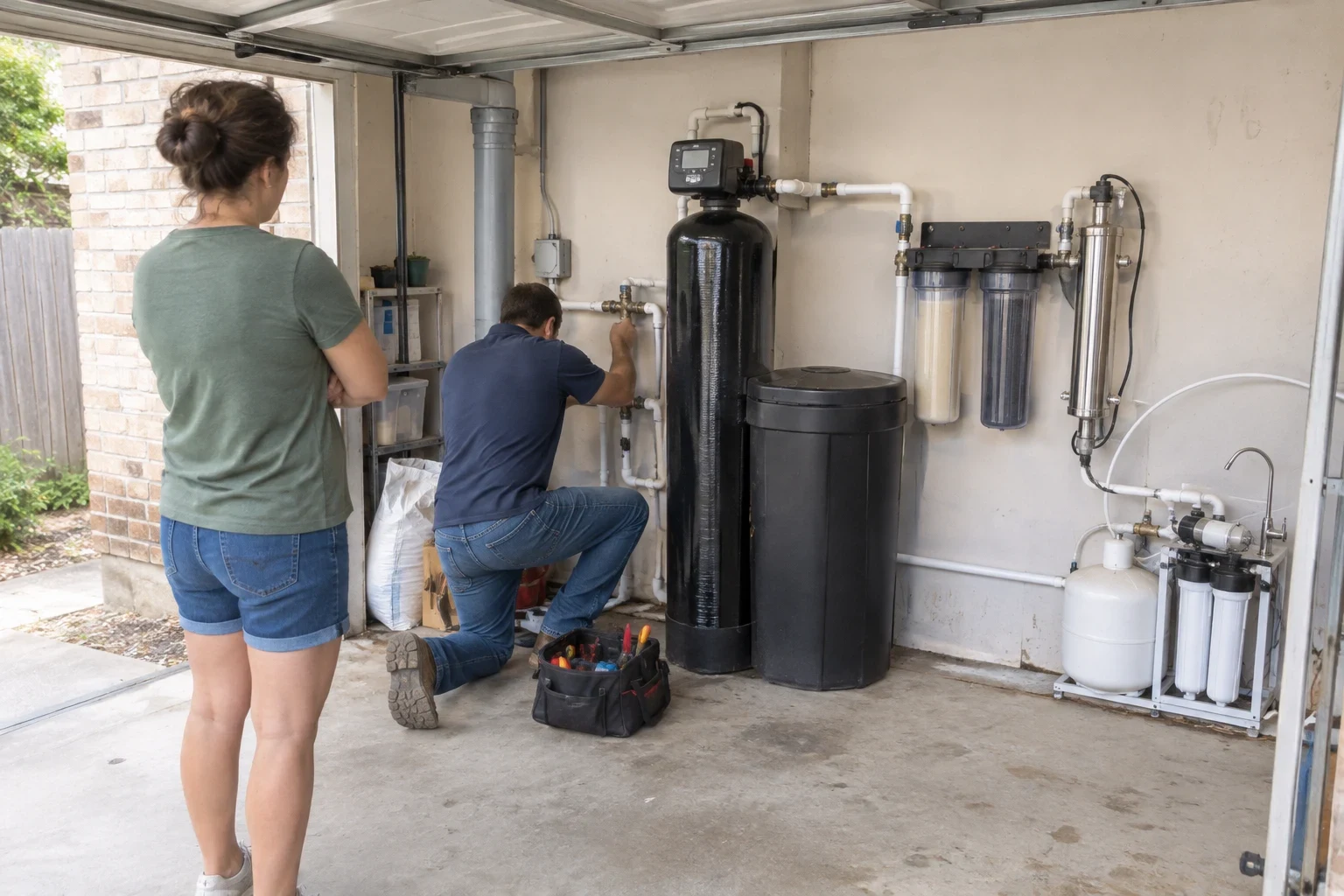
What's included in your water test
- 01
Hardness reading
We measure calcium and magnesium in grains per gallon. This number decides whether a water softener or a salt-free water conditioner is worth a look, or whether you can skip both.
- 02
Chlorine check
City water is disinfected, and the chlorine that keeps it safe can also leave a taste and smell. We show you the level so you know whether whole-home filtration would make a noticeable difference.
- 03
Total dissolved solids and pH
TDS is a quick snapshot of everything dissolved in the water. pH tells us if the water leans acidic, which can wear on copper pipes and fixtures over time.
- 04
Iron and staining clues
Orange or brown stains in sinks and toilets often trace back to iron. We test for it and note any odor, since that can point toward iron and sulfur removal.
- 05
A plain-English summary
You get your results written out with a short note beside each number. No jargon, and no pressure to buy anything on the spot.
Questions about Water Testing & Analysis?
Call(512) 601-8389Signs it's time to test your water
White crust and spotty dishes
Scale on faucets, glass shower doors and inside the kettle is the classic sign of hard water. A test shows how hard it is and which option fits.
Your water smells like a pool
A strong chlorine smell or taste is common on treated city water. Testing tells you the level so you can decide if filtering it is worth it.
Stains in sinks or the tub
Reddish or brown rings usually mean iron. Black or gray marks can have other causes, and a test helps sort them out.
You just moved in
A new house comes with plumbing and fixtures you know nothing about. A baseline test gives you a clear starting point.
Someone already pitched you a system
If a salesperson told you that you need an expensive setup, an honest second test is a smart move before you sign anything.
How your water test works
- 1
A quick phone call
Tell us what you have been noticing, such as spots, odors or stains. We pick a time that suits you and explain what we plan to check.
- 2
Testing at your kitchen tap
We draw samples, usually at the kitchen faucet and sometimes at a second tap. Most readings finish right there in front of you, and the visit is shorter than most people expect.
- 3
Walking through each result
Once the readings are in, we explain them one at a time: what counts as normal, what runs high and how it shows up in daily life. Your questions are welcome at every step.
- 4
A straight recommendation
If something needs attention, we lay out the options, such as reverse osmosis systems for drinking water or whole-home filtration for every tap, and give you a quote by phone or in person. If nothing needs fixing, we say so.
What affects the cost of testing
The standard water test we run in your home is free. A cost only appears if you want answers that go past what we can measure at the tap, and you hear about it before anything is ordered.
- Tap test versus outside lab
- We measure hardness, chlorine, TDS, pH and iron on site at no charge. Lead and specific trace contaminants have to be analyzed by an outside laboratory, and those panels have their own fee.
- How much you want checked
- A lab test aimed at one concern costs less than a wide panel. We help you choose only the tests that answer your actual question.
- A follow-up test after installation
- Some homeowners want a second reading to confirm a new system is working as it should. We explain what that involves when we give you your quote.
Water testing questions we hear often
Is the water test really free?
Yes. The in-home test of hardness, chlorine, TDS, pH and iron costs you nothing. If you want an outside lab test for something specific, we explain that option and its cost first, and it is entirely your choice.
Will you try to sell me a system after the test?
We will tell you what the numbers show and what, if anything, would help. Plenty of homes only need one simple fix, and some need nothing at all. You can take your results and think it over.
Isn't my city water already safe to drink?
Public water has to meet federal drinking water standards, and that is a good thing. Testing is more about comfort and your plumbing: taste, smell, scale and what your own pipes and fixtures add on the way to the tap.
Do I need to be home for the test?
Yes, we ask that you are there. It lets us test at the right tap, hear what you have noticed and walk through the results with you face to face.
What if the test shows I need a system?
We go over the choices and give you a quote. Installation is free, and the equipment we install carries a lifetime warranty on tanks and ceramic discs, 5 years on the control valve, circuit board and filter media, and 1 year on labor.
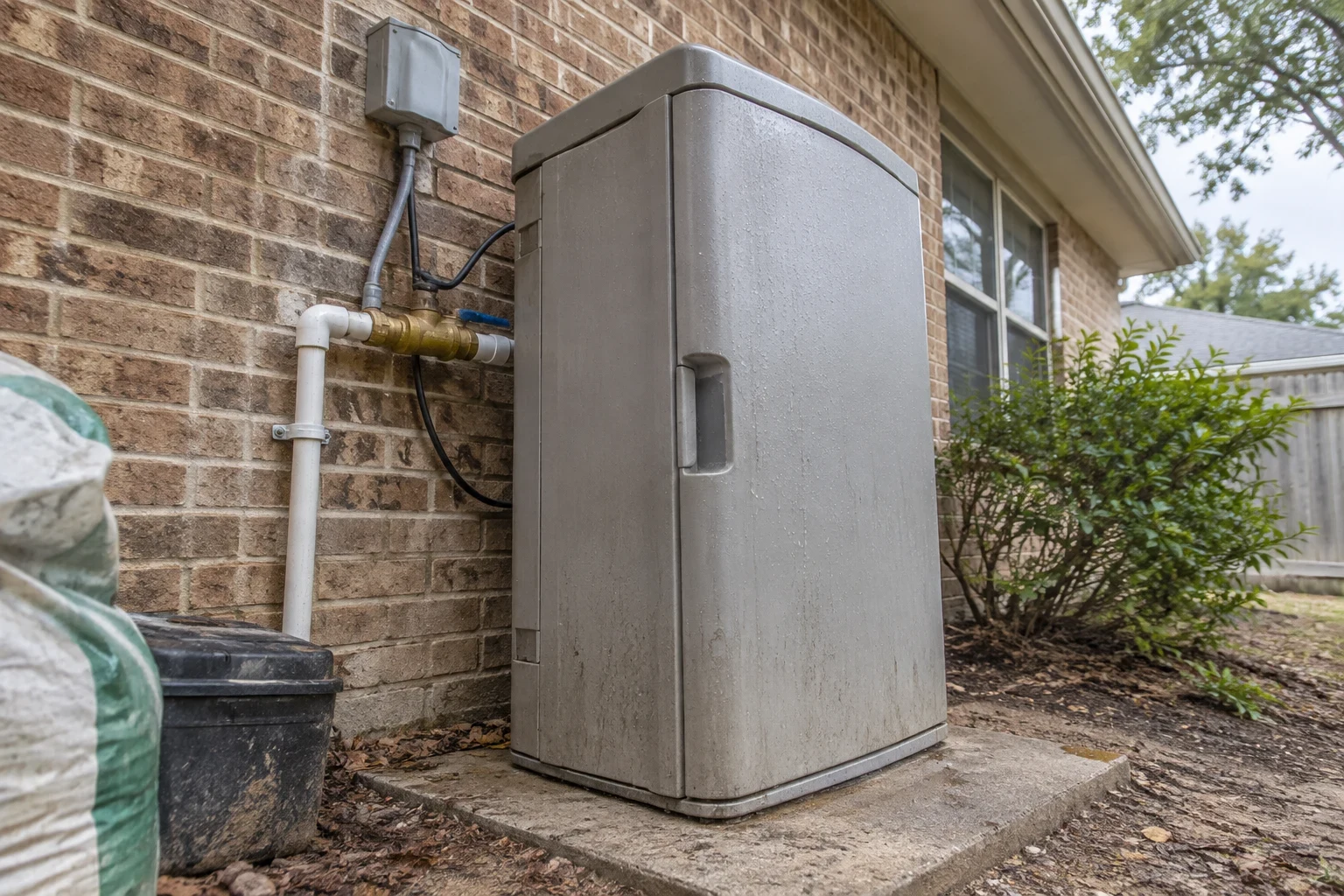
Get real numbers for your water
One visit gets you a handful of readings and a clear explanation of what each one means for your home. We test water in Bee Cave, Lakeway, Steiner Ranch and the surrounding area.