ServicesSalt-Free Conditioners
Salt-Free Water Conditioners in Bee Cave
A salt-free conditioner keeps hard-water minerals from sticking to your pipes, water heater and fixtures, with no salt bags or brine drain. We test your water first, explain in plain terms what the system will and won't do, and give you a quote by phone.
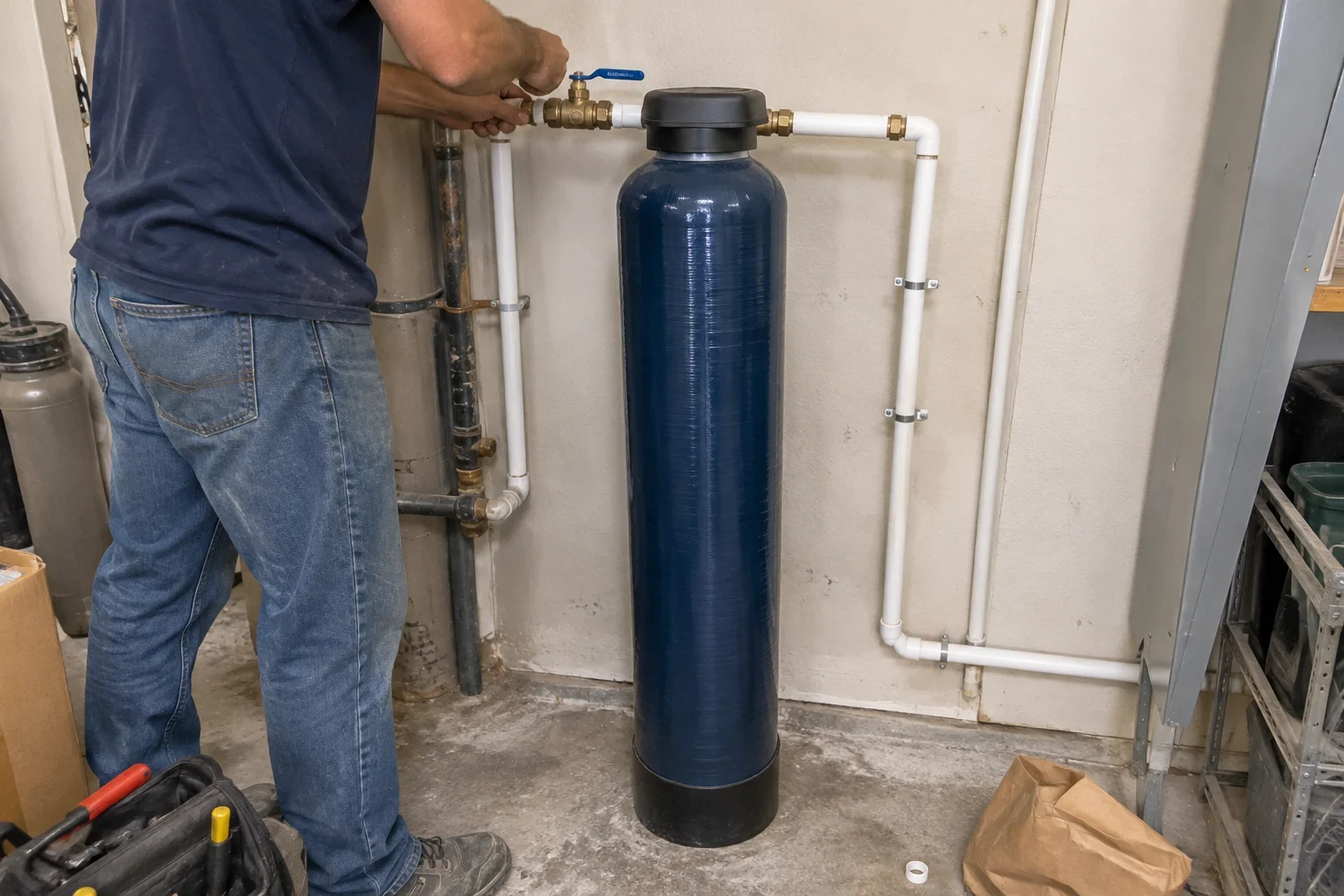
What a salt-free conditioner actually does
Most salt-free conditioners use a media called template assisted crystallization. As water passes through the tank, calcium and magnesium are pulled into tiny, stable crystals that stay suspended in the water instead of baking onto heating elements, faucet aerators and shower glass. The minerals are still there. They just lose most of their grip.
That is the honest difference from a softener. A water softener swaps hardness out for sodium, so water feels slick and glasses dry clear. A conditioner leaves the minerals in, so your water feels the way it always has, and you may still see some spotting where drops dry. What you gain is far less scale inside your home's plumbing and appliances, with no salt to haul, no regeneration cycle and no wastewater.
Hard water is common across the Hill Country, so plenty of homes here are good candidates. Whether yours is comes down to the numbers, which is why we always start with a test.
What's included when we install one
- A water test before anything else
- We check hardness, iron, manganese, pH and chlorine. Those readings tell us whether a conditioner will work in your home and what size it needs to be.
- A sediment prefilter
- Grit and sand coat conditioner media and shorten its life. A simple prefilter catches it, and the cartridge is easy for you to swap.
- Carbon when your test calls for it
- City water carries chlorine or chloramine, which affects taste and can wear on some media over time. If your results show it, we'll explain pairing the conditioner with a carbon stage, the same idea behind our whole-home filtration.
- Sizing to your actual flow
- A tank that's too small lets water rush past the media too fast to do its job. We size by your bathrooms and peak use, not by the biggest model available.
- Free installation at the main line
- We tie in where water enters your home, add a bypass valve so you can isolate the system, and clean up before we leave. Installation is free.
- Warranty registered for you
- It carries a lifetime warranty on tanks and ceramic discs, 5 years on the control valve, circuit board and filter media, and 1 year on labor. We register it and show you what it covers.
Signs a conditioner may be worth a look
White crust on faucets and showerheads
Chalky buildup around aerators, showerheads and the dishwasher door is calcium scale. It's the easiest sign to spot that minerals are settling out of your water.
Crackling sounds from the water heater
Mineral deposits collect on the floor of a tank heater, and water caught beneath that layer bursts into steam as it heats. The crackle you hear is also a hint that the burner or element is working harder and using more energy.
No good place for salt or a drain
Some homes have no handy spot for a brine discharge, or run on a septic system you'd rather not send brine into. Others just don't want to carry salt bags every month. A conditioner needs neither.
Someone at home is watching sodium
Softened water picks up a small amount of sodium. A conditioner adds none.
A tankless heater that keeps scaling
Tankless units have narrow passages that clog with scale and need regular descaling. Cutting the scale before it reaches the heater means less of that chore.
What moves the price
Running costs stay low with a salt-free conditioner, because you never buy salt and no water goes down a drain to regenerate. What you pay up front depends on your test results and how the plumbing in your home is arranged. Installation is free, and every part appears on your quote so nothing catches you off guard.
Bathrooms and busy-hour demand
When several showers and the washer run at the same time, you need a larger tank with more media inside. A smaller household with lighter use can often do fine with a compact unit.
Your water chemistry
Very hard water, or water carrying iron or manganese, may need extra pretreatment. Iron coats conditioner media, so it has to be dealt with first, sometimes through iron and sulfur removal.
Adding a carbon stage
A carbon filter for chlorine adds to the cost. What you get back is longer media life and better taste and smell at every tap in your home.
Where your main line sits
If the main line is out in the open with room around it, the tie-in goes quickly. A line tucked behind walls or one that has to be rerouted takes more time and parts, and we'll show you the reason before any work begins.
How it goes, from first call to finished install
- 1
Call for a free water test
Tell us what you're noticing around the house, and we'll pick a time to test your water. The test costs you nothing.
- 2
Go over the results together
We show you the hardness, iron and chlorine numbers and what each one means. If a conditioner isn't the right fit, say iron is high or you really want slick, spot-free water, we'll tell you and explain the better option.
- 3
Get your quote by phone
We talk through the quote with you on the phone, and you get it in writing, line by line, before you decide anything.
- 4
The day of the install
Most installs are done well before evening. We shut off your water briefly to place the tank next to the main line and plumb in the bypass, then turn it back on as soon as the connections are made. After that we flush the media, check every fitting for drips and clean up before we head out.
- 5
Easy upkeep
Change the sediment prefilter on schedule and plan on fresh media every few years. We'll point out exactly what to check and when.
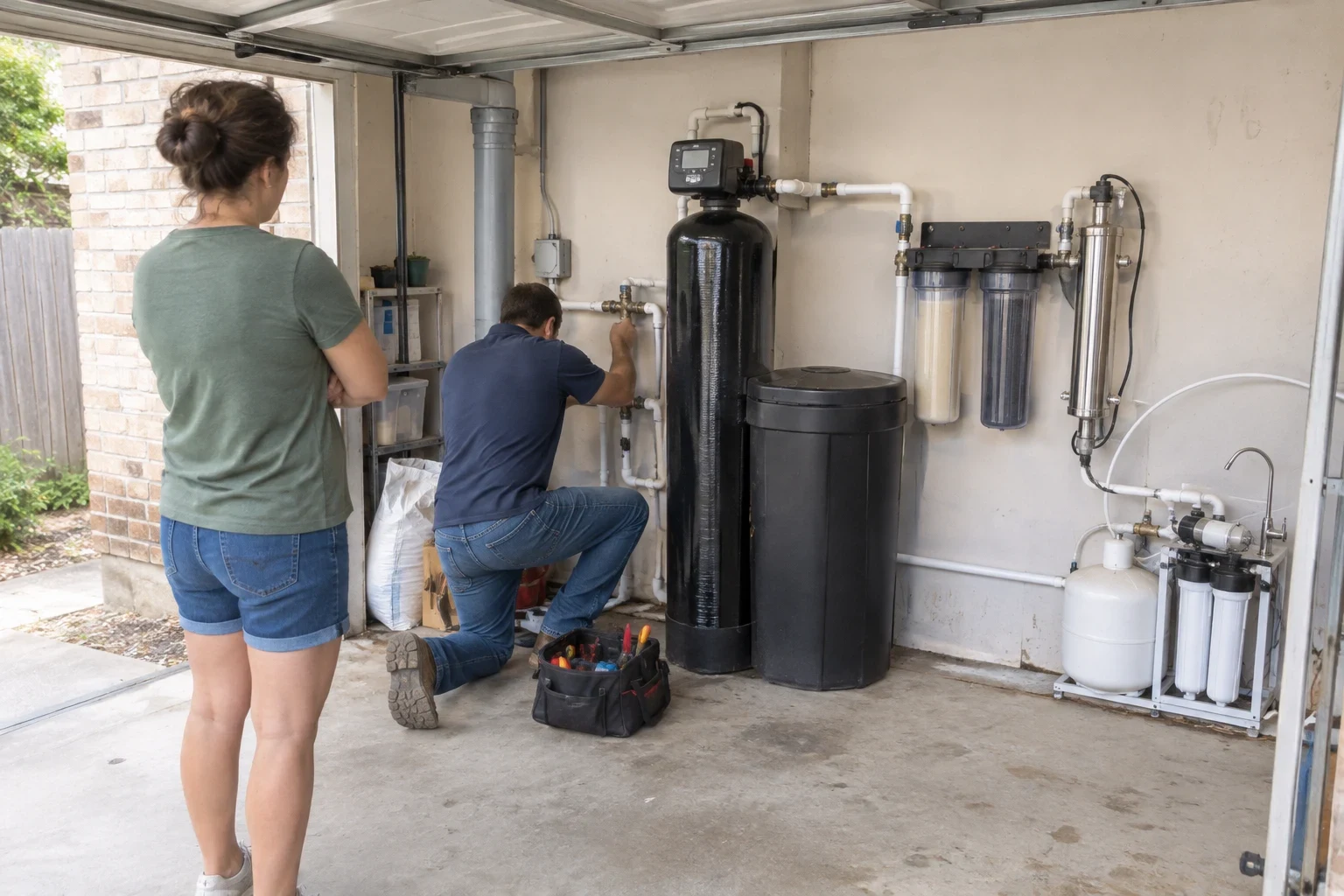
Questions we hear about salt-free conditioners
Is a salt-free conditioner the same thing as a water softener?
No. A softener removes calcium and magnesium, while a conditioner changes how they behave so they don't stick. Your water won't feel slippery, and a hardness test strip will still read hard. If soft-feeling water matters most to you, our water softener installation page explains that option.
Will it stop spots on my glasses and shower door?
It will cut down on them, but probably not end them. When a drop dries, the minerals in it stay behind, and a conditioner doesn't take those minerals out. Most people find the bigger win is out of sight: less scale on heating elements, in the dishwasher and inside shower valves.
Does it need electricity, a drain or salt?
Most template assisted crystallization systems need none of the three. Water simply flows through the tank. The prefilter cartridge is the only routine item you'll handle.
How will I know it's working?
A standard hardness test won't show a change, which surprises a lot of people. Watch the places scale used to form instead. Aerators stay cleaner, kettles build up less, and older deposits often loosen over a few months.
What does the warranty cover?
It carries a lifetime warranty on tanks and ceramic discs, 5 years on the control valve, circuit board and filter media, and 1 year on labor. We take care of registration on install day so it's on file for you.
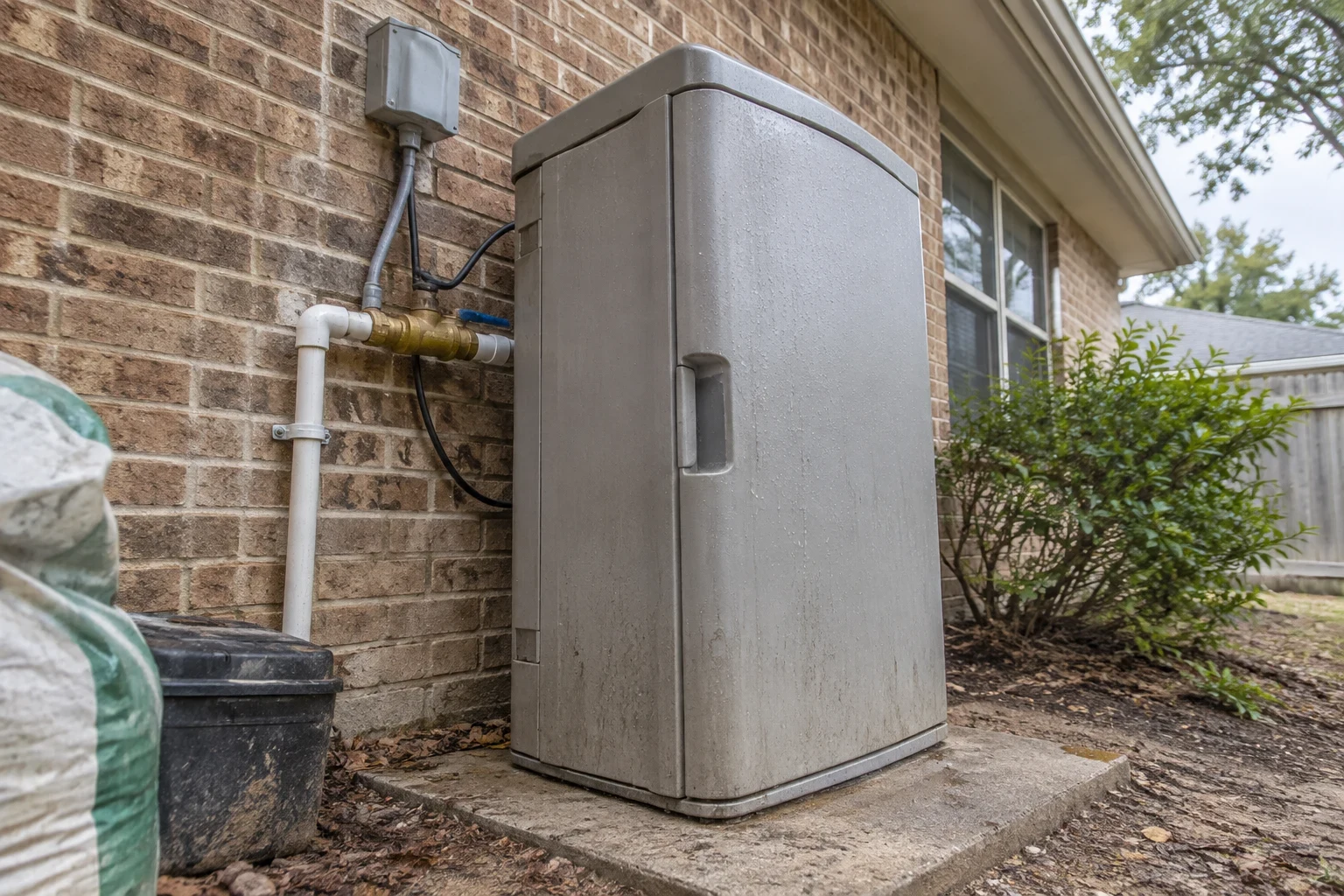
Find out if your water is a good match
A free water test tells us whether a salt-free conditioner will do the job or something else fits better. Either way, you'll get a straight answer and a quote by phone.